This Is Not An Ideal World…Mick

Yesterday, Mick Jagger warned about political lectures at rock concerts. In an ideal world, I think many of us might agree with that, but this is far from being an ideal world. The political machinations of the far right over the past few decades have led the world to where we are today. It’s a re-run of the 1930s in Europe, with an additional level of tyranny taking US politics in a direction nobody would ever have expected.

The term ‘rinse, repeat’ is commonly used these days, but in the case of contemporary global politics it appears we forgot the ‘rinse’ bit. There’s very little clean about 21st century politics, at every level. One of the reasons for that is that everybody expects everything to happen instantly. Life, history, and human development all show that political quick fixes rarely work. In an ideal world, they might, but this is not an ideal world.

While all countries are being encouraged to dramatically increase defence spending, ostensibly to replace arsenals that are being exhausted by 25+ armed conflicts around the world, the true essentials of life are being appropriated by sinister commercial forces: water, agriculture, power, property etc. And bugger the climate! This is our far from ideal world today.

It’s also the case that while government spending is thus diverted, spending on music and the arts (but not the high arts) is like the sponge you just squeezed dry. Yet is to the arts that the medical profession turns to for ‘social prescription’, and it is the arts which lifts us after our working week, and it’s to the arts that successive governments have turned to attract a younger vote. That art has further been devalued by multinational streaming platforms and cyber-plagiarism, is just a further kick in the teeth that we’re all having to deal with.

I’m not necessarily linking these two issues, nor am I saying that Mick is living in some kind of fantasy bubble, but there is good reason why some musicians choose to get political. It’s why flower power rose in the 1960s. It’s why the punk revolution happened in the mid-70s. It’s why Band Aid happened in the ‘80s…It’s why Pete Seeger happened. It’s why Bob Dylan happened…and it’s why Bruce Springsteen has taken a stance against the current US regime. He was already a political writer way before Renee Goode and Alex Pretti were murdered in plain sight by ICE, but those killings really stuck in his throat in ‘the land of the free’. So I applaud him and others of his celebrity for using their massive platforms to say “Enough is Enough”, because most decent human beings on this planet have really had a gut full. Politicians need to start taking note.

Sometimes, it isn’t just about ticket sales and people having a good time. Those things still happen anyway.

Peace.

John

The Eyes of Rutherglen and Leith

Today, 17th June, is my umpteenth birthday. So it’s important to me to do something that gives back to someone who’s been a lifelong inspiration.

The Eyes of Rutherglen and Leith was written and recorded in 90 minutes on 16th June inspired by a recent update on the legal battle to restore Dick Gaughan’s music to its rightful owner. So first and foremost, it’s a tribute to one of the finest folk singers who ever lived, and secondly to a true inspiration both to my music and to values of justice and humanity. If you want to contribute, here’s the GoFundMe link, set up by Colin Harper:

https://www.gofundme.com/f/aatux2 

That someone with a 60 year career in music can have the rights to their own creations ripped away from them by others whose only interest is mercenary financial gain, is something that should astonish us all. It should also encourage us to secure and/or  battle for our own intellectual property rights in a world where techno-juggernauts are tearing them to shreds: fight for what is ours, and help those who are not in a position to. It really feels that the fight has gone out of humanity in this 21st century world.

As a student back in the 1970s, I had the absolute joy of hosting Five Hand Reel at venues at both the University of East Anglia in Norwich and in a couple of pubs in my hometown of Blackpool. So I met Dick Gaughan on a number of occasions that he’s highly unlikely to remember. However, I would add that you know when you’re in the presence of a really special human being.

I should probably add that I barely remember these encounters myself: the Norwich ones were generally preceded by a few of us (including their road crew) drinking an entire barrel of beer. I think we’d already preloaded for the Blackpool ones. All were joyous, fun occasions, but the music always took centre stage and it’s stayed with me for half a century. Those evenings remain some of the finest I’ve ever experienced in music.

Please consider buying The Eyes of Rutherglen and Leith. All proceeds go to the cause.

Peace.

John

Technology and Time

Technology exists to help us become more efficient, or am I missing something? 

I’m normally pretty good at picking up new technologies, adapting to updated technologies, and taking in new information. However, it would seem that new technologies are increasingly ill-thought through in the rush to be first to everything, itself explaining the constant bombardment of updates we all receive. Nothing is ever right at the time of release. It you get it right in the first place, the need for those updates will either be minimal or non-existent. But I promise to stop talking sense for now…

Doing Things Online

I recently opened a business bank account for The Untangled Knot. I was directed to the bank’s App, except the account opening procedure failed to specify which one. As things turned out, I should have downloaded the black and white one for business not the red and white one for personal…but at no point was I told. Given the bank’s main logo is red and white, I thought I was on safe territory, but no.

That little saga finally behind me, I received a snail mail letter containing my business debit card, then a second a few days later another with my pin number. It had one of those handy peel-off strips under which the pin is revealed…except no matter how I tried the pin was completely unreadable. That’s security for you.

Thus, a telephone call was required to get the bank to send another pin. Trouble is, the bank had provided the wrong phone number on the letter they themselves provided, so I had to suffer a menu system and a long wait. The operator apologised, resolved my issue and asked if I’d like to formalise a complaint about the incorrect number. I agreed, only then to suffer a further 15 minutes for that process to play out. I have no hair left to tear out.

However, at least we now have a bank account for The Untangled Knot Limited, into which we can deposit sales revenue and the funding so kindly granted for our project by our friends at Create Berwick.

QR Codes

I struggled for a while to understand the relevance of QR Codes. When Ali Karim and I put a QR code together for one of our works, and it just directed followers to the website they could have gone to in the first place. It seems I was right all along, unless any of you geeks out there can tell me what exactly is the value of having these things anywhere in our lives?

Automatic Checkouts

They rarely work. The fact that they struggle to work is evidenced by the need to have paid staff on hand in the very likely event that they won’t. I’d rather queue with my one item at a busy manned checkout than waste energy on trying to make an auto-checkout do it’s job properly. If they did, I’d use them. Quite apart from that, I like to pass the time of day with another human being when I’m out shopping, and the till person generally likes to pass the time of day back…because we are all still actually humans. Just.

But Just Don’t Get Me On AI

And while we all struggle to make the things that used to work perfectly well work, we have search engines that present AI summaries of our searches at the top of their first pages, most of which are hilariously inaccurate or downright misleading.

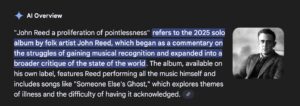
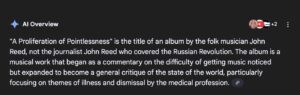
AI, like most technological developments (I’m loathe to call them ‘advances’), has been created largely for good purpose, but it relies on pre-existing accuracies and people using it well. Otherwise I really might be the long dead John Reed, the US Communist journalist who covered the Bolshevik Revolution. What’s the expression I’m left groping for?…”Shit in, shit out” I think.

So that’s my little technology rant for the day. I could have gone on – for pages – maybe even written a book, but I have far better things to do with my time. I’m sure you do too!

Peace.

John

The Importance of Advance Ticket Sales

A recent Instagram post highlighted the increasing trend for gig-goers to buy tickets for performances at the very last minute. It was one of several cries from the heart I’ve seen recently both from the musicians and the venues where they play. Most survive on a financial knife edge, so here are a few reasons why lovers of live music should take note and buy in advance. Some of these are painfully obvious. Others less so.

The Venues:

Nearly 800 late night music venues have closed in the UK since 2020. That represents more than 26%. We are losing too many vital community assets.

In January, a BBC investigation found that half of remaining grassroots venues never make a profit.

Although the rate of closure has slowed this year, you have to ask yourself ‘from what level?’. This insanely creative country has lost so many venues there aren’t too many left to lose.

All of these venues understand that no business has a right to survive, or even make a profit, but all of them try, and all of them carry common cost burdens.

Grassroots music venues lost approximately 6,000 staff in 2025. That’s around 20% of the total. Venues have had to cut staff numbers in order to survive.

Many venues have changed their focus in order to survive, with music now just part of their offer.

Advance ticket sales enable venues to do a whole range of things, from being able to pay touring artists a fair rate, to employing more staff, publicising events, ensuring a profit, and having a greater degree of certainty that they can sustain their business.

The Musicians:

Up to 50% of musicians earn less than £14,000 a year from their creations, so most need to support their craft with other work.

The necessary ‘other work’ means that touring is often restricted to weekends, holidays, close to home or occasional live streams. 

Full time touring musicians need to cover their costs, so they require a performance fee. Many don’t get near the £189.55 Musicians Union rate for an evening performance.

Some costs are obvious (accommodation, travel, subsistence), some less so (insurance, equipment maintenance, the cost of creating merchandise, and of course, time)

The number of venues is declining, and that means fewer opportunities to perform. Venues provide the performers. Performers bring in the punters.

An additional threat is the increasing number of tribute bands, taking up spaces that were once dedicated solely to original music. I have mixed feelings about this. Punters like tribute acts so why not? Playing in a tribute or covers band keeps musicians in practise. So any objection I have is more with the rising numbers than with the existence of tribute acts.

The Essential Support of Gig-Goers:

The Covid pandemic accelerated the changing ways in which we consume music and attend music events. Many of the points raised above have been impacted by lower sales, streaming rather than buying, watching live streams rather than attending the local venue, punters seeming to prefer to see expensive arena gigs and other ‘I was there’ events.

Setting aside the idiocy of paying thousands to see one of the world’s  stellar bands these days, an average arena gig ticket is likely to cost around £100. You can see ten high quality acts for that same amount of money. In attending an arena gig, it’s more likely that you will know the performer’s music, and I get that. In attending a local venue means that is less likely, but it does carry a sense of added anticipation and discovery.  

Music is consumed mainly via the streaming services, which means that sales of CDs, vinyl and other merchandise are at best sporadic. If a musician knows they will be paid £200.00 for a performance and there’s a likelihood of £50 of merchandise sales, it helps them to keep on touring, and to keep creating music. Too many great songwriters and musicians have given up altogether because they can’t make music pay.

Absolutely none of this is rocket science. So with apologies to the already long-converted, please support venues and musicians in the following ways:

  • Book tickets in advance of a show
  • Support individual crowdfunding and (eg) Patreon campaigns
  • Buy music as well as streaming it
  • Buy merchandise
  • Buy food and drink at the venue

Many of us do some of that that when we see an arena gig, so what stops us doing the same at local grassroots venues? Food for thought, but please go beyond holding the thought and support grassroots music in any way you can afford to do so.

Peace.

John

Political Pressure Works – But It Does Take Time…

From twenty years of running my own business, I learned that anything good takes at least a couple of years to achieve. Some get lucky, but the reality for most businesses, for most people, is that luck only comes around a couple of times in a lifetime. In the music scene, the work of organisations like The Music Venue Trust (MVT) has never been so important. They work tirelessly to support grassroots music at all levels. As their name suggests their focus is in trying to overturn the massive loss of music venues across the country. These are staggering losses to any community in a country with music embedded in its DNA. 

So watch the following edition of The Last Safe Space to learn about all the other stuff MVT have become involved in since their foundation in January 2014. Although this video link is a couple of months old, many of the points made remain absolutely valid, and some address matters of real concern to the future of grassroots music. Whatever the concessions and/or support from government, continuing political pressure from MVT has become a vital element in addressing those concerns.

https://www.youtube.com/watch?v=lgIF_xqkbG4

“Our premises taxes are double what they are in Europe”

One of the many takeouts from the video (and please do watch the whole of it if you want to learn what an absolute legend Sam Fender has become!) is that among the threats to survival of our local music venues are business taxes and the way in which the planning system seems to work. “There should be a special business rate for grassroots music venues” does carry creedence.

The respective treatment of small physical venues versus digital spaces run by multinational companies is very, very different. Of those two categories, which has the potential to contribute the most tax revenue to the government’s coffers? The reality is that many big organisations pay no tax at all and others pay lip service through creative accounting practises, while small venues are being clobbered with a level of tax long thought to be unfair. Nobody expects a free ride, but this level of unfairness has stepped way over the mark.

We Are All Part of the Political Process, Like It Or Not

It’s important we all play our part. There’s no point whingeing about the loss of music venues, poor rates of pay from PRS or PPL, appalling streaming rates per play etc, if we are not also – as individuals – prepared to get off our backsides, literally or digitally to do something about it.

I write regularly to my local Labour MP on a range of issues, and his replies are not copied and pasted! Most MPs will engage with a respectful and reasoned approach. Irrespective of political colour, almost all MPs have music in their lives to a greater or lesser degree. All of them like to be re-elected.

MVT is engaging with the political process and getting the ear of Parliament, but there is stuff we can all do to support their efforts. Whether music and the arts or any other subject, it is vital to engage with your local representatives: councillors and MPs rely on re-election, and will sit up and take notice of anything that threatens that. They are also more likely to take notice of organised groups of constituents than individuals. “This is about politicians in their constituencies”.

A good, free way to support independent music, whether the venues or the musicians, is to write to your MP about the concerns you may have for venues in your area, or for the arts in general. It’s important also to remember that when a new MP comes into office, they will inherit a desk full of constituent letters. These give them an idea of the size of the job, but also the priorities for the constituents they have been elected to serve. 

So what are you waiting for?

Peace.

John

‘Black Friday’: For The Benefit Of  Whom?

It used to be mainly settees. There’d be an unmissable sale where stock that wasn’t ‘This Year’s Model’ was offered at a hefty discount. The idea was for businesses to make way for new stock in a new year. I understand that. Then there was the annual Boxing Day family joke about holiday adverts starting at one minute past midnight, but you could rely on it every year, like clockwork. These days, there’s a perpetual settee sale, with deadlines you mustn’t miss followed by more deadlines you mustn’t miss. Holiday adverts have moved their starting blocks from Boxing Day to some time in August, so too has the whole Christmas thing.

‘Less is more’ is a principle of life that helps to keep events special, commercial or otherwise. If each of our birthdays lasted for many months, we wouldn’t have much of a special day. Whether you practise or not, Christmas and Easter are Christian religious events, Diwali is the start of the Hindu new year, and Ramadan is the Muslim month of fasting and communal prayer. The timing of Easter, Diwali and Ramadan are anciently linked to the cycle of the moon. Christmas is the only one of these events to fall on the same day every year. Each of these human celebrations merge into others, the physical evidence for which lies in our supermarket shelves, but being human we’ve added another, and one has to ask oneself ‘for the benefit of whom?’

Yes, I’m talking about Black Friday. The use of the word ‘black’ to describe a day would normally infer a negative context. For example, there’s a book called Black Friday about a shipping disaster in October 1881 just up the coast from here in Eyemouth. A total of 189 men and boys perished that day, many of them from the same families, leaving 93 widows and 267 children without their father. Black Wednesday referred to the sterling crisis of September 1992. Then Black Monday was the name given to the global stock market crash of 1987. Yet somehow, one of the biggest businesses on the planet has appropriated ‘Black Friday’ as another annual commercial event, without any religious or cultural meaning, or any link whatsoever to the cycle of the moon. The term ‘Black Friday’ was first used by US police in the 1960s to describe retail chaos on the day after Thanksgiving every year. Fast forward 60 years, and it has embedded itself as a time of year where people around the world once again lose their shit in an apparent bargain-buying frenzy…only there are few bargains. 

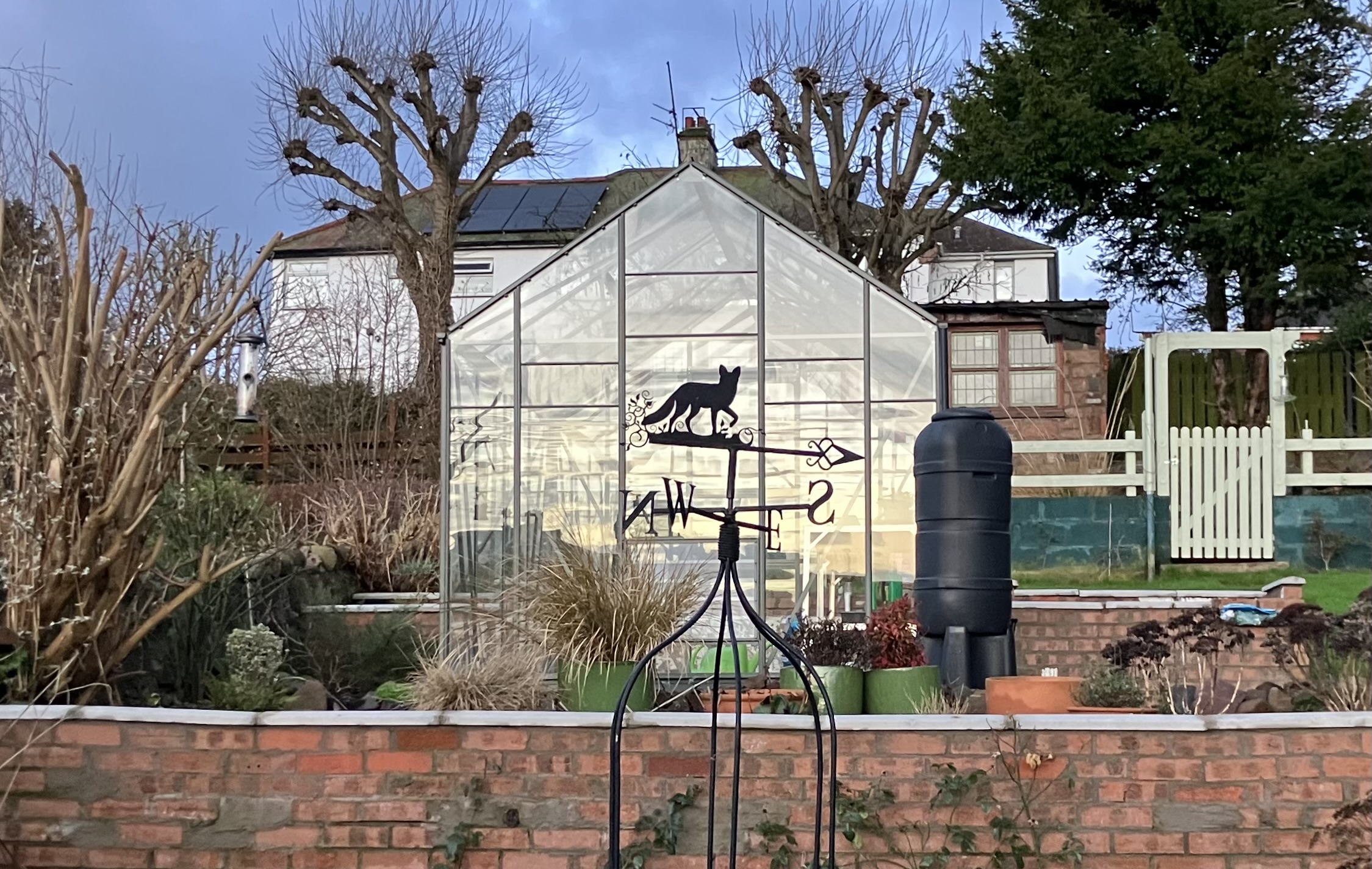
The whole thing is a massive con. Following Amazon’s appropriation of the term, Black Friday became ‘Black Friday Weekend’, then ‘Black Friday   Week’, and onwards to ‘Black Friday Month’, the con just got bigger. Almost every high street business now claims a Black Friday discount, and because many items are cheaper to buy on Amazon, people seem to prefer to patronise this global gargantuan than buy from their local retail store, or their local business. Many independent businesses simply don’t have the profit margins to compete with this insanity and some, like my daughter and son-in-law’s business spend their lives hand crafting custom-made, high quality products whose value should not be diminished. These aren’t products made en masse in a Far East sweat shop. Black Fox products have a personal touch that makes them special, and they are made to last. It is the profit from those products that sustains their family.

I completely understand why people would look around for bargains in the current cost of living crisis, if indeed they are bargains, but do me a favour. Before you lurch headlong into buying bargains most of which aren’t bargains, read Jenny’s blog and further check out their website at https://blackfoxmetalcraft.co.uk/blogs/black-fox-metalcraft-blog/why-black-fox-metalcraft-does-not-have-a-black-friday-sale to understand why their business cannot afford to become embroiled in the annual apparent mass discounting of everything. If the world continues to not support local businesses and local high street shops, their number will be further diminished with many closing down altogether, and the control of everything we buy will be only in the hands of multibillionaires like Jeff Bezos and their extremely well-paid accountants and lawyers.

Peace.

John

About Dick Gaughan…

Back in 1977, I was stage manager for the University of East Anglia (UEA) Students’ Union entertainments committee. It was a vibrant time for music, with punk having exploded on to the scene the previous summer, for which my own milestone was a year earlier, watching Dr. Feelgood blow Hawkwind off stage at the Reading Festival in August 1975. I’d already seen Hawkwind several times, but the Feelgoods were a new experience altogether. The audience stayed as the rain hammered down during their set, but began to drift away as the Hawk Lords took to the stage.

For me, music changed that day, and with it a whole tranche of entitled society. Suddenly, it felt like the kids were in charge and it was their energy that showed the Thatcher regime up for what it was. I say ‘their’ because I was never much of a punk and I’m still probably a hippie at heart. Sadly, those halcyon days have been replaced by something much less palatable.

Throughout the following few years, I had a number of encounters with 5 Hand Reel. We put them on a couple of times in the Lower Common Room at UEA, each time involving drinking games with a road crew who somehow remained sober enough to drive their truck at the end of the evening. Something similar happened when they played at Jenks’ Bar in my home town of Blackpool. 1976 was the year in which Dick Gaughan replaced Chuck Fleming in the band, and from that day to this he has been a big influence on my music and my political views, especially in respect of social justice.

Through his songs, and his unique delivery of so many traditional songs from the UK and Ireland, Gaughan showed me a way ahead. I don’t know of any male folk singer in my lifetime so able to deliver such venom in a vocal performance, then switch in an instant to a more empathetic, sensitive tone. It appealed to my sense of being a Gemini: two personalities in one, yet each being a credible and powerful force of nature. I recognised myself in the way Dick Gaughan sang his songs.

There are few “one-offs” in music, few one-offs in any field of life, but Gaughan – ten years my senior – stands apart. Yet for 40+ years, he’s been fighting for the right to earn from some of his own music. Money was never his motive for creating music. Music is ingrained through generations of his family, and while this highly articulate and intelligent man could probably have forged another path in life, his calling was to uphold his family tradition…and how!

In regularly calling out the way in which earnings in the music industry are stacked in favour of those who don’t actually create the music, I find it incredible, and somewhat frustrating, that modern day musicians continue to patronise platforms which themselves are further depriving them of their right to earn from their creations. These platforms have added a second ceiling above the legal ceiling that allows a business to take away someone else’s right to earn. Neither is easily penetrable, and Dick Gaughan is by no means the only folk artist of his generation who’s had to tolerate such a despicable legal situation. However, when he suffered a stroke in 2016 it stopped him from touring, therefore also stopping him from earning anything at all from his imperious talent. His pension is his music legacy, and a large slice of his pension has therefore been appropriated.

The following Guardian article explains how Colin Harper and a bunch of other fine souls have helped to raise money via re-issues of Dick Gaughan’s music and a successful crowdfunder. Another ‘slew’ of releases is about to take shape. So I would urge you to read the following article, and contribute what you can to support this fine musician’s retirement.

https://www.theguardian.com/music/2025/nov/19/i-never-wanted-to-sing-into-a-vacuum-scottish-folk-pioneer-dick-gaughans-fight-for-his-lost-music 

Peace.

John

COP30. Over and Out?

When global climate conferences involve politicians and scientists all jetting off to a distant part of the planet to make promises they don’t seem to intend to keep, one has to wonder if they have any understanding at all of the existential crisis that faces humanity. If COP30 were to be the last conference of its kind, and all those scientists and politicians could bear to stage a series of smaller, interconnected conferences online rather than polluting an already polluted atmosphere with yet more emissions from jets, then I might give the initiative some credibility. Just now, it’s a joke.

An estimated 50,000 people have flown to Brazil for COP30, and yes, it would be impossible to stage an online conference for 50,000 people, but surely there has to be some form of reset? Increasingly, the COP conferences are attracting fossil fuel lobbyists, intent on hamstringing moves to replace fossil fuels with renewable energy. This isn’t a new thing. Fossil fuel lobbyists seem to show up everywhere to protect their own industry, sometimes spreading misinformation and using commercial and political muscle to delay or overturn decisions that would actually be beneficial for us all. It seems to be the way of this world that a few powerful rich men drag the rest of us along their misguided paths. That needs to change.

No, I’m not a Commie, nor am I ‘Hard Left’. Like most people, my views differ depending on the topic, and as you go through life some of those views shift with personal circumstances. However, if there is one thing that has been absolutely consistent in my life, it has been the clear knowledge that protecting our environment can sustain our race for many centuries to come. It’s also crystal clear that if we continue to abuse it, humans will become history, sooner rather than later. That isn’t scaremongering. It just happens to be true.

Whether it’s taking another foreign holiday, going on another cruise, or even something as simple as washing the car with a bucket of water rather than a power washer, each of those things can make a massive collective impact on our ability to steer our race away from calamity. Ideas such as these are frequently seized upon by Far Right groups as a massive intrusion on the right of people to do what the hell they want. All I’m calling for here is moderation: you don’t, for example, need three foreign holidays a year, have your wedding in Bali, or your stag do in Las Vegas. To me, these things just hammer more nails into the coffin. 

The media trend towards programmes such as racing around the world, getting people out of apparent jungles, finding holiday homes in sunnier climes, raffling massive houses in farmland and on cliff tops – none of it is helping. Yet it’s encouraging the wanderlust in us all, and normalising the pumping of more shit into our atmosphere. I realised exactly how much shit when we made our move from suburban Manchester to Berwick upon Tweed, because my asthma instantly improved. That means the majority of my fellow countryfolk are breathing in shit far more than they know.

So yes, there is something you can do about it. Don’t ever believe there isn’t. With freedom comes responsibility, so I’m fine with someone taking occasional flights abroad if their lives at home are respectful of the environment in which we live: minimising water use, minimising the use of energy, minimising the purchase of products online or wrapped in five layers of plastic, leaving plastic wrapping at the supermarket instead of bringing it home, re-using as much plastic packaging as you can…this really isn’t rocket science. We should stop laying all the blame on the big companies until we have our own houses in order. Then we can lay the blame firmly at their door.

Peace.

John

What Exactly Are You Prepared To Believe?

Throughout history, books have been written about historical events from the perspective and experience of the writer. They write from the perspective of what they have personally come to believe. However, throughout history, books have been written about the same event from different perspectives, leaving the reader with the opportunity to arrive at a balanced view. The reason that fascist regimes don’t like books is that they often give a perspective that doesn’t conform to their agenda, so they ban them and they burn them. The reason they don’t like art is because more often than not it voices opposition. That doesn’t make them strong, it makes them paranoid and fearful.

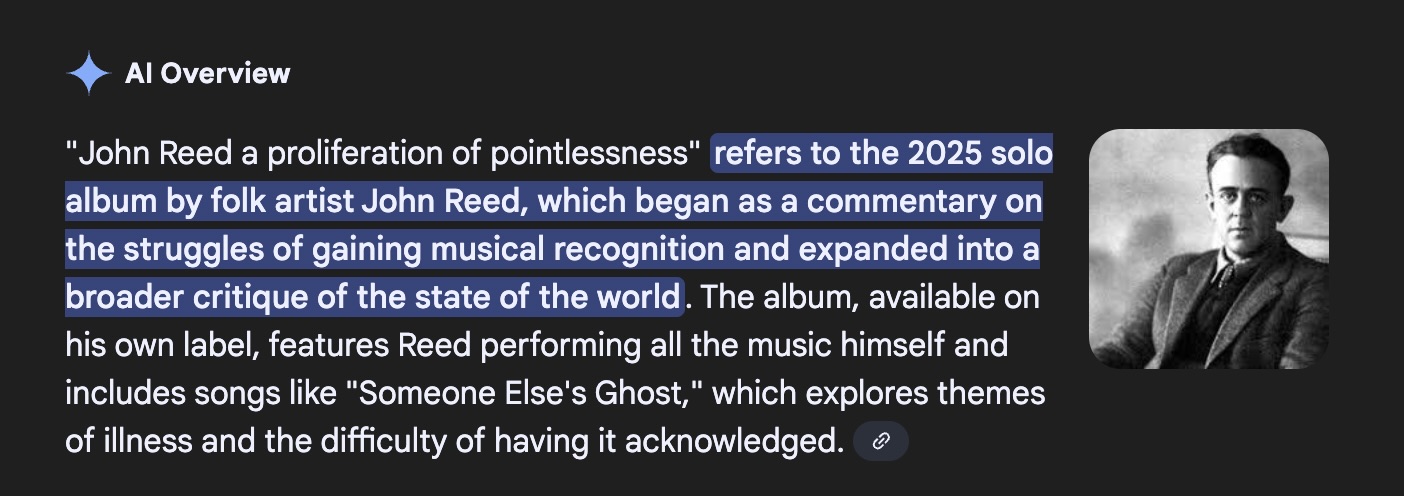
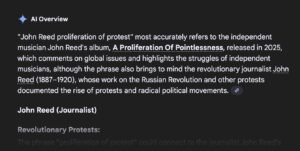
The John Reed in the photo was a US journalist who covered the Bolshevik revolution. It is not me!

Fast forward now to the age of technology, and the foundation of the ‘World Wide Web’ by Tim Berners-Lee in the late 1980s. The concept had been around for at least 20 years before then, but this was the first time the Internet became something the public could use. In a very short period of time, everyone’s opinion became fact, and they could peddle both truths and untruths to a global audience, knowing that people generally like to believe what they want to believe.

In the same way as people too often assume knowledge and fact from a deliberately erroneous newspaper headline, it became possible for anyone to deliberately mislead, from the clever to those who feel a need to be heard, from political manipulators to the downright criminal. Our world has been dominated by a public Internet ever since Berners-Lee’s eureka moment, and in that time, the speed at which information can be distributed has increased dramatically. The speed at which criminals have manipulated information and second-guessed the public’s use of the Internet is nothing short of frightening.

So that’s the background. In my professional life, I’ve been researching the Internet since its inception, and I’ve learned to be extremely cautious about the information it circulates. I’ve always had an unwritten rule to check any statistics at least three times from different, credible sources. In the early days, I started with country populations. At that time, the CIA World Factbook was seen as something of a bible for many in international trade, my profession for 35 years. So I spent some time checking its population figures for different countries, by comparing CIA figures with each of those country’s own statistics websites, and found huge disparities. So I looked further at The Economist, the United Nations, the World Bank and similar respected sites. This confirmed that the CIA Factbook was not the always the book of facts I expected it to be.

So I dug deeper, looking at the population share of each religion within specific countries in different parts of the world. I can’t recall which African country the CIA Factbook asserted was 80% Christian, but it took just a couple of minutes to absolutely disprove. In fact, more than half the population was Muslim, only 20% was Christian, and there were multiple indigenous beliefs being practised in different tribal areas. From that point on, which would have been about 2004, I disbelieved everything on the Internet until I’d seen the same (or very similar) information from three different credible sources. 

That should be the standard we all work to, but during seven years as a tutor in international trade, I found that even experienced business practitioners were submitting assignments that used websites such as Wikipedia and Investopedia as bibliography sources. They were also cherry picking sources from Page One on their Internet search results. So part of my tutoring involved some basic training on how to research on the Internet. My key point was to start your research at page ten or twenty (if the search pages go that far), and work forward to Page One. Page One of any search engine is where companies and governments have paid to be, and that’s where they deliver their version of fact. They are paying to deliver their version of the truth. Generally, the later pages yield information that is more accurate and independently verifiable.

Things have moved on a peg since I retired in January 2023, with multiple social media sites providing a platform for anyone with sinister intent, both to post their manipulative and dangerous agendas, and to organise public opinion and demonstration. Most of the main search engines now have an Artificial Intelligence (AI) summary at the top of Page One. The race to AI, its massive cost, and its servers’ insatiable use of water, is something we should all be fearful of, but because people like to believe what they want to believe, very few are talking about it. AI creates these summaries on the basis of existing information, and at this stage can be very easily manipulated. Shit in. Shit out. Some of the summaries are reasonably accurate, and some would be downright hilarious if it wasn’t for the fact that people actually believe this shit, and worse, knee-jerk react to some of it. There is absolutely zero regulation.

I’ll close with just one example. A few weeks ago, I typed “John Reed A Proliferation Of Pointlessness” into Google: the first of three searches, 30-minutes apart, then a final one two weeks later. “A Proliferation Of Pointlessness” is the title of my latest solo album. What came from AI is summarised in the screenshots in this article. I’ve added them in the order of search. Fourth time lucky, AI eventually got it more or less right, but most people would have believed it the first time. If AI can be this misleading for something so trivial, just imagine…just imagine…just imagine.

Peace.

John


Some Really Good Ways To Help Independent Musicians…Part 2

Sharing great music is the first, best step towards supporting it. So this series of articles seeks to provide simple, but effective steps each of you can take towards bolstering your support for your favourite artists. Please forgive if some of this stuff is preaching to the already converted, whether in this article or in Part 1!

YouTube:

Of all the streaming platforms, YouTube offers some of the worst streaming rates per play, and even artists with millions of views and ‘likes’ will earn very little from even their most popular uploads. However, YouTube is a different kind of platform, focusing almost entirely on video output. It has become a vital part of a musician’s armoury.

Ironically, the number of views and ‘likes’ really matters on YouTube. It seems to signal worth. Whether that turns out to be the case is entirely another matter. Even a view of a few seconds counts as a ‘view’, which is a bit bizarre. As with Bandcamp, a short view can be due to a run-over from a previous song/video, but if listeners aren’t aware of this, they won’t know to take care to listen to full songs.  Many artists allow you to ‘like’ with a thumbs up, or God forbid, ‘dislike’ a video. The latter opens you up to the dickheads of the world, whose raison d’être is purely to disrupt, but it’s part of the territory and they get bored soon enough.

Most videos are accompanied by some form of written introduction to the song beneath the video. Most viewers seem blissfully unaware that if they click the word ‘more…’ they might find a mix of information from where to buy, song credits, lyrics, the story behind the song or the filming of the video, the video location, and other relevant links. So please remember to click ‘more…’.

Comments are not always enabled on an artist’s YouTube channel, but where they are, don’t be afraid to leave a supportive message. Most of us use some form of moderation. For my own part, I have all comments from new subscribers held until I’ve read them. I respond to the genuine comments, and take a view whether unsolicited stuff is Spam, otherwise malicious, or from one of the aforementioned dickheads! I was trolled by a dickhead in the early days of YouTube, but I think they find that a little harder now that the channel has introduced more safeguards.

Then there’s this word ‘Subscribe’. With Bandcamp, ‘subscribing’ involves paying a nominal annual fee. YouTube ‘Subscribes’ are entirely free. When you click ‘Subscribe’ on YouTube you will accumulate on the left hand side an alphabetical list of the channels to which you subscribe – like a bookmarks column. You will also be notified when those artists release new videos.

Beneath the artist’s image on their YouTube Homepage are a series of tabs – generally four or five of them. Unless I have a Live stream planned, I have four: Home, Videos, Playlists and Posts. There is also a Search Icon to the right of the tabs, where you can type in specifically what you are looking for. So if you type “Standing Stones’ you will find all public videos for my song of that name.

Artists don’t publish all of their videos on their channel. If they select ‘Public’ then everyone sees the videos. ‘Unlisted’ means that if you’ve saved a specific video you can view it as many times as you like, and you can share it, but it is not searchable. ‘Private’ means only the artist can see it, unless they choose to share it privately to another’s email address.

Finally, just like with Bandcamp, an artist has an Analytics page. You can’t see that. This shows them a range of information from new subscribers to the average length of time a video has been viewed. Again, that average time can be skewed by viewers allowing one video to run over into another. The Analytics page can tell you where in the world your audience is from, what devices they tend to view on, and a whole range of stuff that helps, for example, to shape future video output, and sometimes set lists for live shows.

So when you view a video, try to watch it all. If you enjoy it, ‘like’ it, subscribe to the channel, leave a comment, or share it with others. 

Peace.

John