The Future for Independent Radio and Independent Music
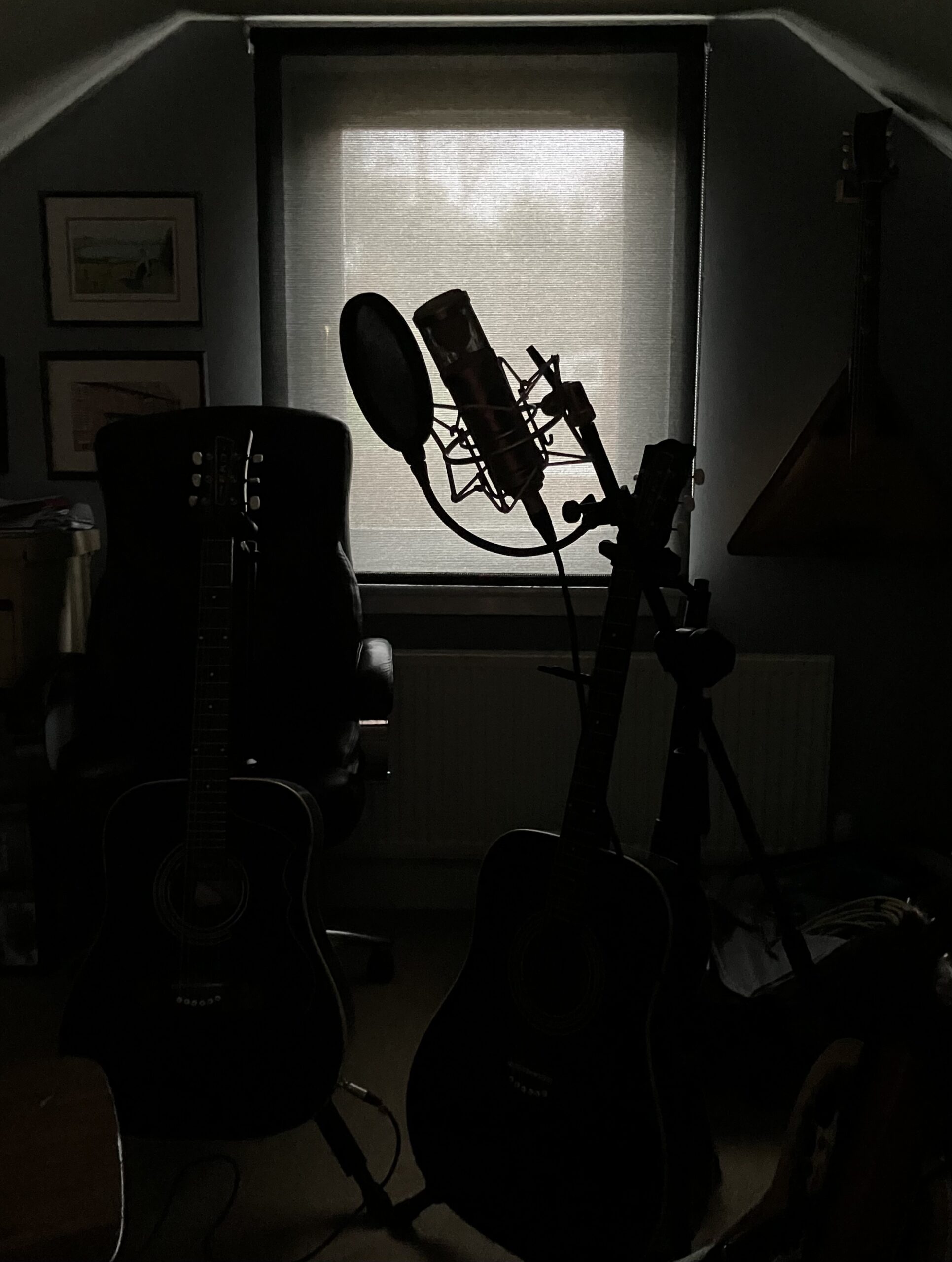
I’ve long been of the opinion that independent radio is one of the last bastions for independent music. There are new challenges ahead, and this article seeks to encourage your support.

As someone who records and releases music independently, I’ve enjoyed a huge amount of support from independent radio shows, whose work is almost exclusively done by a dedicated army of volunteers. As host of the weekly Compendium on Folk Friday Radio, I have the privilege of listening to huge amounts of new music submitted by independent artists from all corners of the world, putting the best of it into playlists with instantly recognisable songs from established artists. Together, technology and a wealth of music intuition have significantly narrowed the gulf between the two offerings – the independent and the ‘signed’ – to the point now that the only difference between the two is in opportunity, not quality.

Music has evolved over the centuries and will continue to evolve. We’re still using many instruments today that were first designed back in medieval times. We’re still singing songs that have endured the test of time over the centuries, adding our own contributions along the way. Music will always face challenges, because art generally always has. Politically, the arts is where the first cuts tend to be made, unless it’s the high arts! So we can either adapt or die in defence of our respective talents. I intend to adapt.
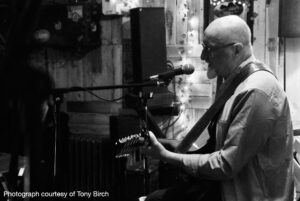
Not everyone will like everything we do. Thank goodness for personal taste, for different backgrounds in life and music, and for collaborations that explore the fusion between different minds. I fundamentally disagree with any musician who says “we’re not in it for the money”, because it’s the money that affords CD runs, travel, accommodation, subsistence, insurance, instruments….the list goes on and on. It is to the independent radio presenters that I now tip my hat, for doing what they can to bring the music of independent musicians to a wider audience without ever asking for a fee.

However, independent radio and community radio also have their challenges. There are several levels of broadcasting license, with costs governed by the number of listeners and how the show is accessed. Annual licenses begin for internet only broadcasts at about £200.00. In addition, there may be an annual fee for the platform you use to host your station or show, so you aren’t going to get much change out of £500.00 for establishing the simplest form of internet only station. The quality of platforms varies. Many are seamless, but some are technically inept, so interruptions, interference, and outages can play their part. Platform selection is key.

Bare bones costs for larger community radio stations can start around £5,000.00 per year, including premises hire, equipment, technical support, and all the other associated costs. Some community stations pay a limited number of dedicated staff to keep the shows running, but much of their work is volunteer based. Donations and sponsorship are an essential part of the success of any radio venture, and in challenging economic times, the arts generally take a severe hit. To the musicians looking in, if some of these shows support your music, please support them back in whatever way you can, even if that’s just by recommending your followers to tune in.
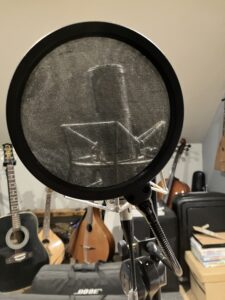
The newest threat comes from Artificial Intelligence. We shouldn’t be sucked into thinking that all AI is bad, because there are many different types, but we should be alert to the dangers associated with the unscrupulous use of it. The challenges generated to music creation by AI have been well documented, but nobody seems to be talking about the challenges to radio, whether independent radio or commercial mainstream.

Commercial radio needs funding, and advertisers therefore look to the more popular stations. Those tend to play the most popular music, selected not so much by DJs, but determined by the number of playlists a song may appear on. Numbers drive the whole industry to the point where it’s losing sight of the art. For years, this has been limiting opportunities for independent musicians to have their music played on air.

In early December, I was sent a song created supposedly by a young European based artist. It was a brilliantly produced hip hop song – not my usual choice of music, so it wouldn’t get played on the Compendium. The artist sent me a lovely email to accompany the song, complemented me on the music choices in my chain of gymnasia. Problem number one: I don’t own gymnasia across Europe. So the sender had plucked my name from an AI Google search, which added 1 + 1 and got 5.

I replied, because I always reply. As I was listening to the song, I wished the artist would reduce the use of synthesised voice, and it dawned on me that it might not actually be a human voice, but one generated by AI. In my reply, I complemented the artist’s vocal, and asked if they’d consider sending me an acoustic version without the use of a synthesiser. There has been no reply. That doesn’t mean I can say with certainty that the song was AI generated, but my suspicion therefore is that even at independent community radio level, we will increasingly be targeted by music that is not created by human beings.  AI means that anyone with ChatGPT or similar can make money out of music without being able to play or sing. That has to be worrying.

We are all going to have to become much smarter in dealing with the threats and challenges to our existence, and just as we need to support  independent music at this critical time in music history, we also need to support the independent radio stations and shows that lend their own support to independent musicians.

So let’s start 2026 by making useful contributions to both: buying not just streaming independent music; donating to the upkeep of independent radio stations. Together, we can do something powerful to turn back the tide.

Have a very happy Christmas and best wishes for a New Year filled with hope and great music.

Peace.

John

Some Really Good Ways To Help Independent Musicians…Part 4

Sharing great music really is the first, best step for individuals to support it, but it can go beyond just supporting the musicians themselves. Independent radio has become a last bastion for independent musicians. As the saying goes, ‘independent radio and independent music are interdependent’, but it seems most people haven’t quite cottoned on!

In supporting an independent radio show, you show support for independent music – yeah, I know, it really isn’t that simple. At least it provides a focus for where this article goes next. Defining ‘independent radio’ is a challenge in respect of general support for grassroots music, because there are mainstream shows that also give air time to a selection of the best of music from the independent world. Defining ‘independent music’ is also not that straightforward, because a musician’s label (if they have one) may be a well established independent business. So this article gives a snapshot of the way radio works in the UK insofar as my current level of knowledge can take it. Hopefully, it will open a more accurate conversation about where we go from here.

The Bigger Picture:

Probably the biggest shift in the independent radio scene in recent years has been the BBC’s cutting back of local radio stations from 2022. If there was an earlier signal in the folk scene that a shift might be on the way, it may have been when Mike Harding’s popular Radio 2 Folk Show was shut down in 2012: he did not go “of his own volition”. That’s no disrespect to Mark Radcliffe who’s done an excellent job since, but when a stalwart of the traditional folk scene was so publicly sidelined, it seemed to point a direction of travel. Some would say that’s a good thing. Some would disagree. My own view is that age doesn’t stop music creation, nor the ability to project one type of music over another. The BBC missed a trick in not accommodating both.

Meanwhile, the comparative ease and lower cost of establishing an Internet radio presence, meant that while the BBC was re-jigging its entire local radio offering, other players were joining the game. It seems this shift is not only irreversible, but that commercial radio is much more alive and well than I’d been led to believe: “Commercial radio has reached its highest ever share of UK radio listening at 55.7%, widening the gap over the BBC which now stands at 42.1%” (RAJAR 2025). But then there’s the way in which each station selects the music for their shows.

We are a long way from the days of Radio Caroline and John Peel. Back then, presenters were hired for their music knowledge, and skill in identifying, selecting and presenting a wide range of music. To an extent, TV killed the radio star, but radio remained important for those, for example, who liked to work to music, drive to music, revise to music, etc. These days, many radio shows are populated only by songs that appear on the highest number of playlists, taking the selection process away from the presenters. The theory is that playing the most popular songs will hold on to the biggest audience. In reality, it’s alienated many stations from a vast swath of fabulous new music created independently in bedrooms and garages across the world.

While all that is a very simplistic view of the way in which UK commercial radio works, it does paint a reasonably accurate picture. An estimated 39.5 million people tune in to commercial radio stations every week. “Online listening across the UK continues to grow, with a record 29.3% of all radio listening now happening online – ahead of AM/FM analogue listening at 26.6%.” (RAJAR 2025). The point here, is that however music is selected for individual stations or shows, radio remains a really important outlet for independent music.

A Global Labyrinth:

A whole tranche of radio is now accessible only online: Independent Radio, Independent Community Radio, Community Radio, and the conflation of the words ‘community’ and ‘commercial’. Is it a global community, national, regional, or local? The answer is ‘all of those things’ because the Internet now means we can listen for free to stations hosted for minimal cost on global platforms. That said, it’s an absolute nightmare for listeners to navigate their way around the myriad radio offerings, so they tend to hone in on the few that seem to best match their tastes, or sometimes the ones that are physically close by, and stick with them. There is a largely unexplored psychology to radio listening habits that I don’t intend to get into here!

One of the problems the listeners themselves have is the variety and respective clarity of websites that host independent radio shows. Sometimes the quality of the radio feed can be an issue. Platforms like Mixcloud are excellent in providing a fairly clear and obvious structure. Check in particular Black Dog Radio‘s live Saturday morning show on that platform. However, the websites of other independent platforms and the stations themselves leave a lot to be desired, and resource is almost always at the back of all that. I’m picking out just a few from the hundreds of UK shows to give an idea what I’m talking about:

The BSide, Cardiff UK: https://radiocardiff.org/index.php/shows/the-bside/ 

Beyond Radio, Lancaster UK: https://www.beyond.radio/

Celtic Music Radio, Glasgow UK: https://www.celticmusicradio.net/ 

Folk Friday Radio (Internet Only): https://global2.citrus3.com:2020/public/folk-friday-radio

QRadio, Belfast: https://www.qradio.com/belfast/radioplayer/ 

TD1 Radio, Galashiels: https://www.td1radio.scot/ 

Wey Valley Radio, Alton UK: https://weyvalleyradio.uk/ 

The structures are very different. The music ‘genre-focus’ for a radio station isn’t always clear. We live in a world in which an extra click seems too much effort for many. That said, it can still be difficult to locate individual shows, and while we’ve been working on a website for Folk Friday Radio for a while now, its development needs funding and it needs time to get it right. Folk Friday Radio isn’t unique in that. In the end, the first focus has to be the music. The rest will follow. Most independent radio shows are run by teams of volunteers. Independent radio is not a money-making venture. It’s focus is exactly where it should be, on the music.

In accepting that the support of independent radio for independent music, however well-intentioned, has something of a disparate feel to it, I would encourage each and every one of you to try something new: a new station, a new show, new music, world music. There is a whole mine of music out there, and it isn’t that difficult to find new and innovative shows, presenting fabulous music you will not have heard before. If you do find something new, whether a new show or a new musician, please don’t keep it to yourself. Share your experience with your community of family, friends and other contacts. It all helps.

My final point is addressed to the musicians. As a musician, I know how hard it can be to get a new release listened to. I know that a new release probably has a radio shelf life of 3-4 weeks before it seemingly vanishes into the ether. I also know that it can take time to find and listen to the radio shows who play your music, and build a relationship with their presenters. Been there, done that, and still doing it. Do you know why? It’s simple really. The more support is reciprocated, the more support you get. Independent radio is a last bastion for independent music. As the host of an independent radio show on an independent radio station, I see that more clearly now than ever.

I hope you’ve all found these four articles useful in directing your support for independent musicians. There will be more in the future in order to accommodate the chameleon of online existence, but for now please share this article, share independent radio experiences, and most of all, share the music that you love.

Peace.

John 

Some Really Good Ways To Help Independent Musicians…Part 3

Sharing great music is the first, best step towards supporting it. It need not cost you a bean, so it’s also a good way for people with little spare dosh to engage with their favourite artists. So far, this series of articles has focused on the pages of the musicians themselves, but this week we’re looking at one of the places where you can find a range of  independent music played and promoted. 

Mixcloud:

Just like Blue Sky Social, Mixcloud is not run on algorithms like Facebook, Instagram, and their despicable ilk. What that means is that you, as a human being, connect with other human beings on the platform. If you choose to follow a radio show on Mixcloud, it’s presented by another human being. If you choose to comment on a show, you will receive a response from another human being. It’s how it was always meant to be.

As I write this, I’m listening to Andy Inns present his 3-hour weekly epic of the best of folk music in all its forms. It runs from 9am to 12 noon (UK time), and unlike many Mixcloud shows, Andy runs the Black Dog Radio feed live from his bunker in Belper, Derbyshire. I’ve been listening to the show for years, and frequently find music on there from artists I’ve not heard before. The quality never drops. Andy has also been kind enough to feature my music from time to time.

I upload my weekly Compendium to Mixcloud (just one hour folks – I don’t know how Andy does it!) and I’m still a comparative novice, approaching just 250 shows. I actively search for new music. As well as being sent submissions by various artists and agencies, I buy from platforms like Bandcamp (see Part 1 of this series of articles) and draw from an ever- rowing music collection. 

I don’t know how many shows Mixcloud now hosts, but it’s significant. So if you’re looking for new music, it’s a really good place to go. Like most radio stations, most of the hosts on Folk Friday Radio upload their shows to Mixcloud after they’ve aired. It’s a veritable gold mine.

There are several things you can do to support these shows, and therefore indirectly support your favourite independent musicians. The simplest things to do when listening to Mixcloud shows are to ‘Follow” the shows and ‘Favourite’ any that really resonate with you. Just like with Bandcamp and YouTube , the number of ‘Followers’ gives some indication of the quality of each show. Not perfect maybe, but it’s at least an indication. ‘Favourites’ help to elevate the status of a show still further. Positive “Comments” take it up a notch beyond that.

The most important things you can do on Mixcloud are to share the shows you like, and to make comments about the songs you like. These shows are listened to by musicians at all levels, when they aren’t creating music, touring, or being otherwise engaged. Feedback for musicians is really important, whether provided directly or indirectly…and yes, feedback is also important for the shows. Independent radio and independent music are interdependent, and you can play a part in strengthening the connection between the two, for example, by telling musicians at gigs where you first heard their music, or a particular song. You can help the shows by telling them theirs was the show where you first heard a particular musician. It all helps.

Note also that there are links to other websites from a Mixcloud page, and that there are tabs above the list of shows. Mine are ‘Shows’, ‘Posts’, ‘Reposts’, Favourites’, and ‘History’. The first two of these take you to lists of shows and posts from that page. ‘Reposts’ are the shows you have re-posted from your own page, ‘Favourites’ provides a list of shows you’ve favourited, and ‘History’ the shows you’ve listen to.

Mixcloud themselves nearly stopped operating a couple of years ago, because too many users were treating it as a perpetual freebie. So they set a limit of 10 shows for any user who wanted to carry on using it for free, and slapped a £9 a month charge for those of us who found the platform valuable enough to store our entire history of shows. Just as music should not be for free, neither should radio.

Because of this monthly charge, some of the more established shows like give you the option to send a one-off tip, or to subscribe to their shows. There is absolutely no compulsion to subscribe because we don’t do this for money. For my part, any small contributions fund the purchase of music from independent music platforms like Bandcamp, which I then play on The Compendium. Next time around, I’ll take you through some of the ways in which independent radio stations and shows present themselves to the world. It isn’t consistent, so it’s a guide that might help you wade through the treacle!

Peace.

John

What The Compendium Is All About…

I’ve been running The Compendium in its various forms since April 2021. Its original title was “John Reed’s Progressive & Acoustic Compendium”. The show is settled in its current home at Folk Friday Radio, and airs every Wednesday at 8pm UK time. All of the shows at Folk Friday Radio seek to promote the work of independent musicians and singers, presenting high quality music and songs you might never otherwise hear. 

From the outset, The Compendium has maintained the following core aims:

  1. To play each song just the once, allowing for more songs to be played
  2. Not to focus only on new music – all releases are welcome
  3. To listen to everything submitted, all the way through. It takes time.
  4. To mix songs from independents with those of established artists
  5. To play a mix of progressive and acoustic music
  6. To achieve 80% of its content from independent musicians
  7. To buy independent music as well as air it on the show
  8. To never pre-announce playlists

I’ve tried a few different things along the way. Compendium PodViews have had a mixed response: some very well received; others disappointingly so. The latest PodView was uploaded just a couple of days ago – a conversation between me and John Elliott of The Little Unsaid – and appears to be doing quite well. This ebb and flow of support for the show, with the ebb most predominant during the summer months, has reinforced my view most listeners prefer an association with bands/artists they already know. It follows that those PodViews have been the more successful. This also means listeners are not really that interested in finding out about the work of newer artists on the scene. I find that rather sad.

For about 7 months of 2024, I ran a first of the month Monday evening “What’s On?” show to highlight songs by artists gigging in the UK in the month following. It created more interaction with artists and venues, but live listener numbers didn’t really justify the effort. I ran a simultaneous Facebook feed which provided the handles of each artist and venue …but then the fascistas at Meta decided that this most community spirited of actions was against their own warped community standards, and led directly to me belatedly closing my account this year after a month-long countdown with a banner emblazoned with “It’s February 28th. It’s Fuck Off Facebook Day” Actually they threw me off before I could deactivate on that day. I’m rather proud of that!

The Compendium is about a community of music. “What’s On?” and the PodViews were created to incorporate venues, managers and promoters as well as the artists themselves. Both took a lot more work than I ever expected, so “What’s On?” was ditched and PodViews have become an occasional treat. People tell me they love The Compendium, but the show is rarely shared across the networks of the musicians I try to support, so I’m asking now for that to happen on a more regular basis. This has to be a two way street or it will become no street at all.

As a musician myself, I’ve benefited from airplay on multiple independent radio shows, most of which tend to focus on new releases. As a musician, I also know that a new release has a radio lifespan of 3 or 4 weeks, which is why The Compendium became one of the shows to accept older releases. So please share this show around, and support other independent radio shows because they will continue to play an important role in promoting your music. I have two simple rules: I do not do Spotify; MP3s only of songs not albums please to my email address news@johnreedmusic.com (as a musician I have limited listening time). If I decide not to play your submission, I will at least provide a list of other presenters who might.

So if you truly value independent music, if you value independent radio, and want a community based  future for both, you can help by sharing article with your friends and followers. The Compendium airs on Folk Friday Radio at 8pm (UK time) every Wednesday, after which it is uploaded to my Mixcloud until hair begins to grow profusely out of your ears and nostrils.

Peace.

John

The Thing That Really Staggers Me…

Human behaviour. That’s what. I’m not talking here about we highly sophisticated and entirely connected humans raining bombs down on each other. I now take it as read that this race will never learn from its mistakes, but I am talking about the problem of ‘habit’. Bear with me, this is good, and the social media magnates will hate it – assuming they would read it, assuming they would notice this minor pinprick in their orb of self-importance. The real problem is that we insignificant, individual humans actually sustain them.

‘Fraid so. Looking back nearly half a century to my student days, I would have been the very last person on the planet who I’d have trusted with running any kind of responsible business venture. Late teens and early twenties are absolutely not the time for us to establish in our garages, other out-houses or bedrooms, a communications system that would over-connect the entire globe for the fifty years following. Look at every social media and music platform, and you will find its origin in teenage. At this point, parents would normally be expressing concern.

Yet here we are, and there they are. The richest man in the world seeks alpha male dominance to change politics forever, and the signs are he’s winning that battle. Meanwhile his nemesis (or one of them, because he doesn’t have many friends) and his cohort of geeks claim they have created a ‘verse’ for the future of this race, where everyone can be connected with everybody, and that wonderful things called privacy is consigned to history.

No, I don’t mean his version of privacy, where all you need to do is issue policies. I mean mine, where every time I open my fridge something apparently intelligent isn’t going to create my next supermarket shopping list. There will come a time soon when all a human needs to do is look in their fridge to instigate a process that leads to the immediate drone or robotic delivery of any missing items. So on current performance you could expect a cauliflower to replace a bottle of milk.

When a business becomes too big it fails, maybe not in all departments but its focus turns away from the customers who sustain it – yes, I’m slowly but surely getting to my point. Sometimes, you need to paint a picture that humans may recognise before delivering the sucker punch that exposes collective, abject stupidity. We are creatures of habit, and if ever there has been a time in our history when we need to break the habit, it is probably now. If we were drug addicts or alcoholics, we’d all have been sent to a clinic by now, some of us for a course of therapy, others to remain there as long-term patients, incapable of controlling our habit.

There is generally a straw that breaks the camel’s back. Remember Friends Reunited,  MySpace, and their ilk? However, the 21st century version of the camel’s back appears to be significantly more resistant, dominated as it is by a few mega-rich humans who don’t just have the ear of presidents and prime ministers, they have them firmly by the balls, and it’s excruciating for us all. It’s dangerous enough on a political level, but we have moved now into a mind-control battle that we minions are ill-equipped to deal with, and do not have the inclination or drive to fight.

Most of us are followers, not leaders. We prefer the comfort of someone else having to do the thinking and take the action. Our lives are busy enough without having to consider existential threats, and that’s where they’ve got you. “Everything will be alright in the end” is not something that can be applied to a world where megalomania is so deeply embedded. So we will all continue to use the platforms set up by these maniacs, on the basis that it connects us with our ‘friends’.

It is one of the joys of social media that we can connect with other human beings wherever they may be in the world. It is also one of its biggest problems, because most of us are too trusting: after all, “everything will be alright in the end”. When I was that awkward, delusional, and rather unkempt teenager I would communicate with my friends by going round to their house, or possibly phoning them up. Occasionally, I would hand-write letters. In fact, I was quite good at hand-writing letters, and used to accompany my writings with biro cartoons. These days, we text or message to find out the most convenient time to set up a Teams or Zoom call. It is reaching the point where an impromptu visit from a friend, or even family, is seen as an intrusion. They’ve got us all by the balls too. See where I’m going with this?

It won’t happen overnight, and in fact will probably take the whole of 2025, but little by little I’m de-camping my music and radio effort to Blue Sky Social, on the pretext that it is run by real humans and doesn’t rely on algorithms to direct who sees what and when. Not perfect and probably temporary, but at least it acknowledges that you’ll miss stuff, which means you have to post more often to be seen. I am under no illusions. Blue Sky will eventually go the way of the rest, because we humans like either to control or destroy anything good. However, when Faecesbook spends more time suggesting I should connect with people I have no intention of connecting with, buy things I’ve already bought, splash unwanted post and adverts across my wall, and notifying me of comments made by other users on my posts several days late, thus actively preventing me from communicating with my ‘friends’, then I’m heading for the lifeboat.

I’ve been running my Compendium radio show since April 2021. It accompanies my wider music activities, and has been both a great way of observing how other musicians promote their music and the best way to promote the music of other grassroots, independent musicians creating original music. For the whole of that time, I’ve supplemented my personal and music Faecesbook pages with a radio page, to help my little show to highlight some of the incredible music that too few people are bothering to listen to. From January, the music page will be ditched. On current form, the radio and personal pages may not be far behind.

As part of my radio offer, I run a monthly show called “What’s On?”. The purpose of The Compendium “What’s On?” is entirely to highlight a sample of gigs by independent musicians and the venues where they play across the UK and Ireland. Every month, I therefore post the Faecesbook handles of both artists and venues. Every month, Faecesbook blocks me from doing that on the spurious grounds that it ‘contravenes their community standards’, yet what could be more community-minded, possibly even selfless, than that? Every month, I feed this back to them. Every month, they don’t give a shit. I tried being polite at first, but I don’t think bots understand politeness. Today, I became semi-abusive, possibly to try and get them to eject me permanently, but I really have had enough now.

“Everything will be alright in the end?” Will it fuck. Not unless human nature changes.

The worst part though, is that having said all of that, I may now, as a member of this race, post this article for other humans to read via Faecesbook and other media platforms, then take no further action over whatsoever….except I will. Make sure you follow me and not them. It’s safer.

Peace.


John

Ringing The Changes

Today, I have changed the name of my Facebook radio page from “John Reed’s Progressive & Acoustic Compendium” to “John Reed Music & Radio”. This is so I can bring together all my music and radio activities on a single page for 2025. I can’t change this name again for 60 days, and it won’t change again unless and until I take the decision to use the page solely for my music.

New content for my current music Facebook page “John Reed Live / TFA” will move over to “John Reed Music & Radio” from 1st January. I was originally going to ditch both these ‘Meta’ pages altogether but for now, a single page seems a more pragmatic way forward. Exiting platforms like this is a long, drawn-out process, but that remains the ultimate intention.

Peace.

John


A Right To Like. A Right Not To…

Personal taste is just that: personal. As someone who receives a lot of music submissions for my weekly Compendium on Folk Friday Radio, I hear music from across music spectra, sometimes commercial, and sometimes anything but. However, I’m not a music purist, so if I like a song enough and it fits with the ‘Progressive & Acoustic’ mood of any particular Compendium, then in time it will be played.

As a songwriter, I see curating a playlist like putting an album together. While each playlist carries a different mood, there need to be a number of ‘lifts’, either in tempo or in atmosphere to hold listener interest. Therein lies the 21st Century’s biggest music issue: listener attention span.

Just as musicians check their online profiles to see how many times a song has been played, and the average listen time, radio presenters can do that with their shows, especially on platforms such as MIxcloud where listeners can go back and listen multiple times if they wish to.

It’s just the same for videos on YouTube, Vimeo, Vevo, or whatever platform as artist chooses for music promotion. Most platforms come with some form of analytic: a dashboard that provides you with an idea of how you’re doing, and in almost every case listen time percentages can be very disappointing.

When I listen to other artists’ music, it’s really rare that I can’t bring myself to listen all the way through. On those rare occasions, I will know very quickly when a song doesn’t pass muster. I don’t do comedic songs on The Compendium, and while I have in the past played the occasional song containing excessive swearing, any radio presenter will tell you that their station needs to follow ‘community guidelines’, ‘broadcasting standards’ and other seemingly restrictive terms. Otherwise, every song gets a thorough listen, sometimes several.

Submission rates have ramped up over the 3 years I’ve been running the show, and it’s reached the stage at times where I struggle to listen properly to everything. The musician in me tries very hard to hold to that standard, but I also have a life! Family will always come first, and I enjoy an active music life. I create my own music – solo and collaborative, with seven collaborations currently in varying stages of progress. I run my own radio show and commit to listening to between 8 an 10 hours a week of other shows. I review albums for Fatea Magazine…and I’d quite like to get back to playing live shows!

Yet I find time to listen properly to the music of others because that is something I’ve always done – even before the Compendium. Most listeners barely get beyond the first few bars, the hook, or occasionally the first chorus, before they press a social media ‘like’, ‘share’, or pass the occasional comment. Musicians need more from listeners than a cursory listen, and that’s why I value so highly my regular listeners to The Compendium and those who consistently support my own music creations.

In the final analysis, each of us has a right to like or dislike what we listen to, but we won’t know whether we like it unless we read beyond a media headline, past the preface in a novel, or listen to a whole song to fully understand its meaning. Art appreciation needs to last longer than a fleeting glimpse or a cursory listen, and experience in anything doesn’t come from soundbites. How we turn this juggernaut world around to a better way of appreciating music and art, I really don’t know, but I feel that at least it’s important we should appreciate it better.

Peace.

John

Evening Slot Secured for The Compendium

As folkfridayradio.com finds its feet, so too does The Compendium secure its 8pm GMT Wednesday evening slot on the station. This means that the weekly Facebook chat feed will move from @AcousticProg to @FolkFridayChatThreadPage. @AcousticProg will continue to advertise and preview the show as usual. It will also retain its Tuesday afternoon slot, and the show will be uploaded to Mixcloud after its Wednesday airing.

Importantly, this also marks to start of the first regular evening on folkfridayradio.com for some more progressive and world sounds. The Compendium will be followed from 9pm every week by Rick Stuart’s highly respected @RootsandFusion show, which has aired more than 700 times over the years. I’m more than happy to be Rick’s Wednesday support act!

Folkfridayradio.com was only launched this month, and we continue to talk to more presenters to further populate our schedules with the right people and the right sounds, any thought that this might be regarded as some kind of ego trip for hobbyists has quickly been dispelled. We mean to grow, we mean to stay around for a very long time, and that is why it will not all happen overnight.

Folkfridayradio.com will continue to play a vital role in supporting high quality independent music, of which there is no shortage.

Peace.

John

Forza #FolkFriday!

Every so often something happens to reinforce a belief that the path you are treading is the right one. When I started The Compendium in April 2021, it was more of an experiment than the vocation it has since become. I was in a bad place at that time because the persisting long Covid severely curtailed my music activity for about 30 months, so when Karin Ingram at TD1 Radio offered me the opportunity to host my own show there was only ever going to be one answer. I will be forever grateful for that opportunity and for the friendships that have developed since via her Sunday Getherin show.

Over the nearly ten years since I began recording music seriously, I’ve made a number of good friends on the UK and Irish radio circuit. These are people who were as quick to support my own music, as they have consistently shown their support for the independent music community in general. Whenever I release new music, there are 25 radio shows I send it to as a priority. So with Blues and Roots Radio leaving the airwaves, it is with some delight that news broke of four of these excellent folk pooling their resources to create Folk Friday Radio.

The Compendium spent more than two years on the Blues and Roots Radio network. For about a year from September 2021, the show ran concurrently with its slot on TD1 Radio, after which it became a Blues and Roots exclusive, with the ‘listen again’ feature on Mixcloud @JohnReedBreathe.

Nothing lasts forever. Good things always have a life span, and what David Dee Moore, Ian Freedman, Neil King, and David Chamberlain have done in creating Folk Friday, is to breathe new life into independent folk radio – and by definition into the independent music scene. These are incredibly challenging times for independent and original music, and this new venture feels like a milestone for the way forward.

It’s a privilege for the Compendium to be joining this growing group of shows from next week alongside Genevieve Tudor’s excellent Sunday ‘Plays Folk‘ Show, and others. Independent radio and independent music are interdependent, so we need the folk community – listeners, musicians, other radio shows, promoters, venues, review platforms, etc to give as much support as possible to each of the Folk Friday shows. Look out for their social media feeds, and please use the #folkfriday hashtag in your own posts.

For the time being, the Compendium will continue to air at the same time as it did on Blues and Roots, with the Mixcloud show remaining at @JohnReedBreathe, together with its simultaneous Facebook chat feed @AcousticProg. I hope you’ll all join me in wishing Folk Friday the success it deserves.

Peace.

John